

On 28 September 2026, the RESOLVER consortium came together for its first online meeting, officially launching a three-year collaboration to advance nature-based solutions and circular resource recovery in rural and peri-urban communities across Europe and Latin America.
The virtual kick-off meeting brought together researchers and experts from the six partner institutions: the Catalan Institute for Water Research (ICRA, Spain), Helmholtz Centre for Environmental Research (UFZ, Germany), University of Natural Resources and Life Sciences-related partner ANRI (Austria), Federal University of Santa Catarina (UFSC, Brazil), Universidad Nacional Agraria La Molina (UNALM, Peru), and Instituto Tecnológico de Santo Domingo (INTEC, Dominican Republic).
The meeting provided an opportunity for partners to get to know each other, share their expertise and establish a common vision for the project.
Turning wastewater into opportunities
RESOLVER aims to help small communities manage water and wastewater more sustainably by promoting nature-based solutions and circular economy approaches. Rather than viewing wastewater and sludge simply as waste, the project explores how they can become valuable resources, including reclaimed water and nutrients for agriculture.
During the meeting, partners presented the main activities that will guide the project over the next three years. These include developing tools to help communities identify suitable sanitation solutions, improving the existing Nat4Wat platform, and studying real-world examples of nature-based technologies.
A key highlight was the presentation of 12 pilot initiatives across Europe and Latin America, covering different approaches to wastewater treatment, water reuse and nutrient recovery. These pilots will provide valuable insights into how nature-based solutions can respond to the needs of communities facing different environmental, social and economic challenges.
The consortium also discussed how to make these solutions economically viable and sustainable in the long term, ensuring that their benefits can extend beyond the lifetime of the project.
Building bridges between regions
One of RESOLVER’s main strengths is its collaboration between European and Latin American institutions. By bringing together experiences from different countries, the project seeks to encourage mutual learning and develop solutions that can be adapted to diverse local contexts.
The partners agreed on the importance of involving local communities, public authorities and other stakeholders throughout the project. Knowledge exchange workshops, practical guidance and openly accessible resources will help ensure that the project’s findings reach those who can put them into practice.
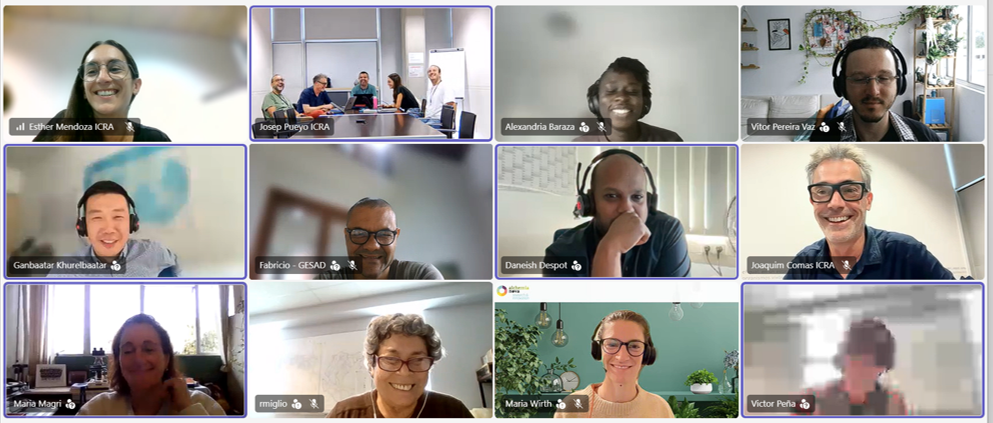
The meeting also served to coordinate the first activities and establish the calendar of future consortium meetings. The partners plan to meet in person for the first time in Peru in 2027, followed by another gathering in Girona in 2028.
Looking ahead
With the kick-off meeting completed, RESOLVER is now moving into its first activities. Over the coming months, partners will begin working together on the project’s planning tools, pilot initiatives and stakeholder engagement activities.
The meeting marked the beginning of a shared effort to make sustainable sanitation and resource recovery more accessible to small communities, demonstrating how collaboration across continents can help address common water challenges.
Stay tuned for updates as RESOLVER progresses! Follow our activities, pilot experiences and upcoming events here on the project website.
Leave a Reply