
RESOLVER – Advancing nature-based action for circular resource recovery in rural and peri-urban communities across Europe and Latin America is an international research and innovation project focused on promoting nature-based solutions for circular sanitation and resource recovery. The project addresses the challenges faced by small rural and peri-urban communities where conventional wastewater and sludge treatment systems are often too costly, complex, or poorly adapted to local needs.
RESOLVER aims to support the transition towards more sustainable, resilient, and inclusive water and sanitation systems by treating wastewater, greywater, sludge, and urine not only as waste streams, but also as potential sources of recovered water, nutrients, biomass, and other valuable resources. By integrating nature-based solutions into circular bioeconomy strategies, the project seeks to improve environmental protection, public health, local resilience, and resource efficiency.
Objectives
The main objective of RESOLVER is to develop new knowledge, tools, and strategies that facilitate the implementation and long-term maintenance of nature-based solutions for water, wastewater, and sludge management in rural and peri-urban contexts.
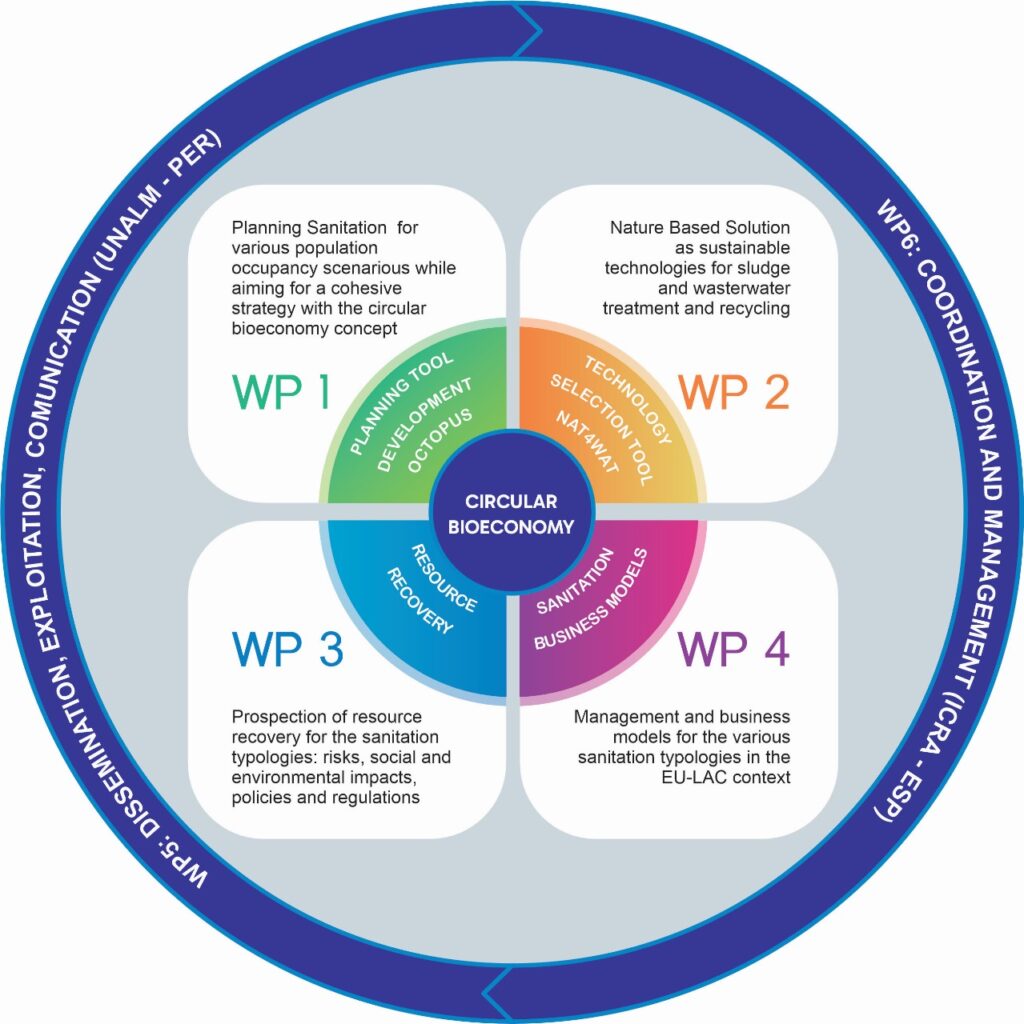
More specifically, the project will assess existing sanitation practices, compare centralized and decentralized treatment scenarios, support the selection and pre-design of nature-based technologies, and develop business models that help ensure the long-term operation and replication of these systems. RESOLVER will also promote knowledge exchange between European, Latin American, and Caribbean partners through workshops, policy dialogues, open-access tools, and communication activities.
Consortium and pilot sites
The project brings together partners from Europe, Latin America, and the Caribbean, combining expertise in wastewater treatment, nature-based solutions, decision-support tools, business model development, environmental monitoring, and stakeholder engagement.
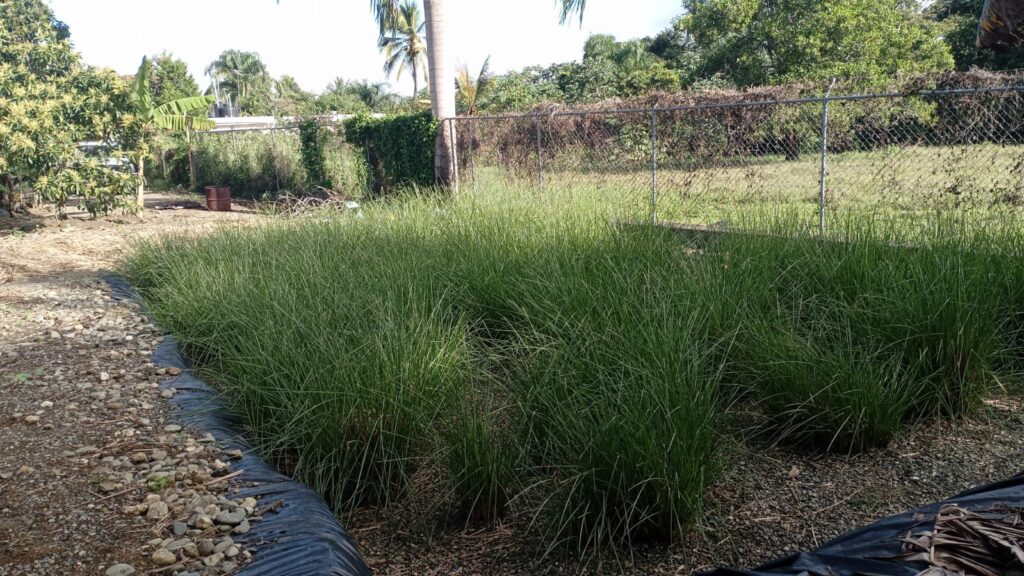
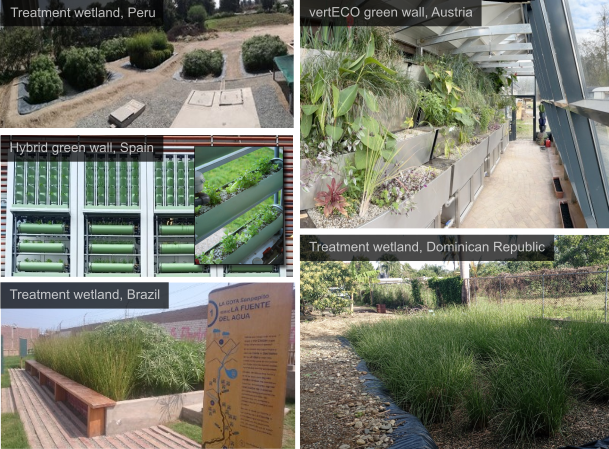
The consortium includes partners working in Spain (Catalan Institute for Water Research), Austria (Alchemia-nova GmbH), Brazil (Universidade Federal de Santa Caterina), Peru (Universidad Nacional Agraria La Molina), Germany (UFZ-Helmholtz Centre for Environmental Research), and the Dominican Republic (Instituto Tecnológico de Santo Domingo). These countries host a set of pilot and demonstration sites covering different sanitation scenarios, including decentralized wastewater treatment, greywater reuse, faecal sludge management, and urine separation for nutrient recovery. The proposal identifies pilot contexts in Girona, Fehring, Santa Catarina, Jarabacoa, and peri-urban Lima, among others.
Methodology
RESOLVER combines practical pilot monitoring, spatial and economic analysis, stakeholder co-creation, and digital decision-support tools. The project builds on existing tools developed by consortium partners, including the OCTOPUS platform for scenario-based wastewater infrastructure planning and the Nat4Wat tool for the selection and pre-design of nature-based solutions.
These tools will be further developed to include additional treatment options, such as sludge treatment and resource recovery pathways, and to improve their usability across different linguistic, governance, and socio-economic contexts. The project will also monitor real pilot systems to generate evidence on treatment performance, nutrient recovery, sludge stabilization, energy use, and ecosystem co-benefits.
A key element of the methodology is the involvement of local stakeholders, including communities, utilities, authorities, and practitioners. Through participatory workshops and co-design processes, RESOLVER will develop context-specific solutions and business models adapted to local needs and capacities.
Expected results
RESOLVER is expected to deliver practical knowledge, validated data, and open-access tools to support the wider adoption of nature-based sanitation systems in small communities. The project will generate evidence on the technical performance and resource recovery potential of different nature-based solutions, while also assessing their environmental, social, economic, and governance dimensions.
Expected outputs include improved planning and selection tools, pilot monitoring datasets, business model guidelines, policy recommendations, factsheets, webinars, and knowledge exchange materials. By the end of the project, RESOLVER aims to provide decision-makers, practitioners, and communities with practical pathways for implementing circular, low-energy, and nature-based sanitation solutions.
Ultimately, RESOLVER contributes to more sustainable water management, circular resource use, biodiversity protection, climate resilience, and improved sanitation in vulnerable rural and peri-urban communities across Europe, Latin America, and the Caribbean.